Customer Guide
Welcome to the Customer Guide
Looking for a refresher about Corrugated Packaging?
Corrugated packaging is the backbone of modern shipping, storage, and product protection. Whether you are sending out subscription boxes, organizing inventory, or creating retail packaging, understanding how corrugated material works helps you choose the right box for the job.
This guide breaks down the basics in a simple, practical way so you can both communicate your needs better and better select packaging that is reliable, cost-efficient, and designed for your products.

What is Corrugated?
Corrugated, not "Cardboard"
Most people refer to corrugated boxes as cardboard boxes, but they’re technically not the same.
This can lead to some confusion with the terms. Cardboard is a heavy-duty paper stock or sheet, commonly used for folding cartons and other applications. You’ll find folding carton boxes lining grocery shelves are often made from cardboard. Think of a cereal or tissue box. This type of box isn't one you would expect to survive the shipping process. Toss one of these in the mail and they’ll likely arrive at their destination in tatters.
A corrugated box, on the other hand, is all about strength.
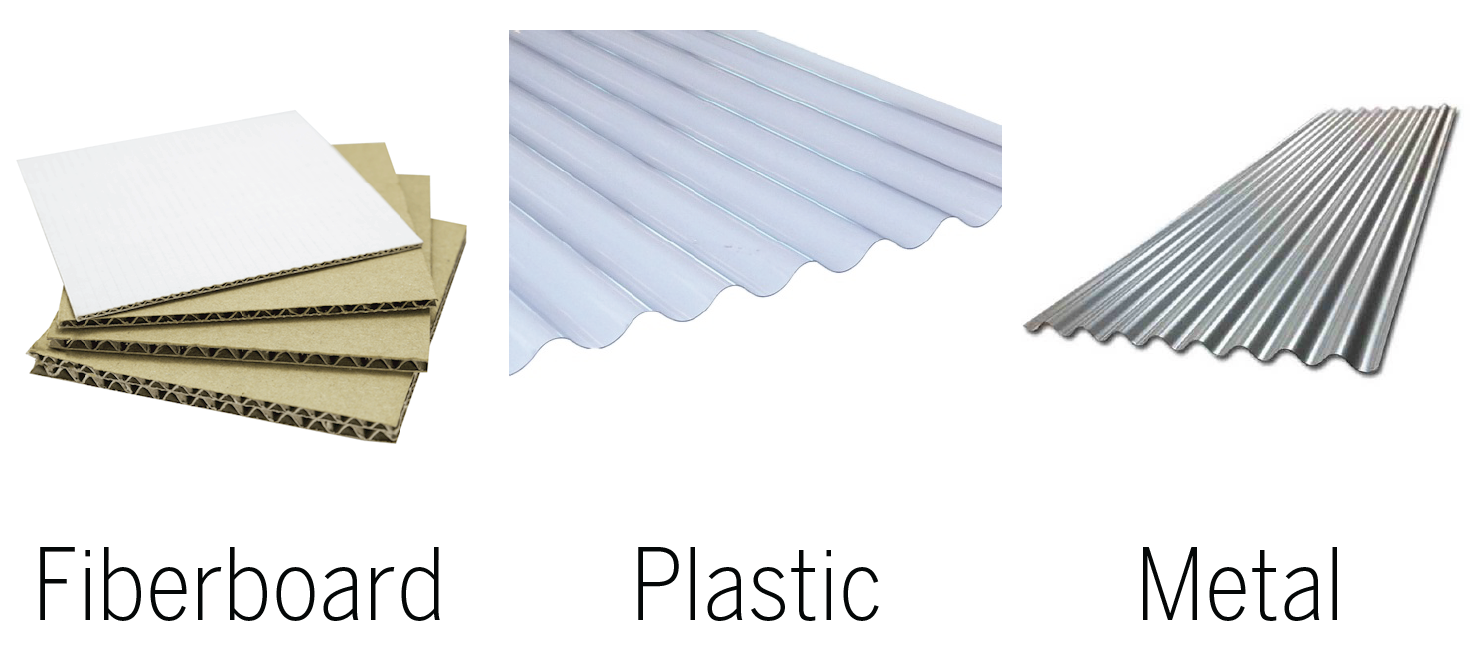
Architects have known that an arch with the proper curve is the strongest way to span a given space. By joining arches together, a wavy or fluted construction material was formed and is used all over the place. We've seen corrugated metal sheets used for siding and roofing of buildings, and corrugated plastic panels used on lightweight greenhouses.
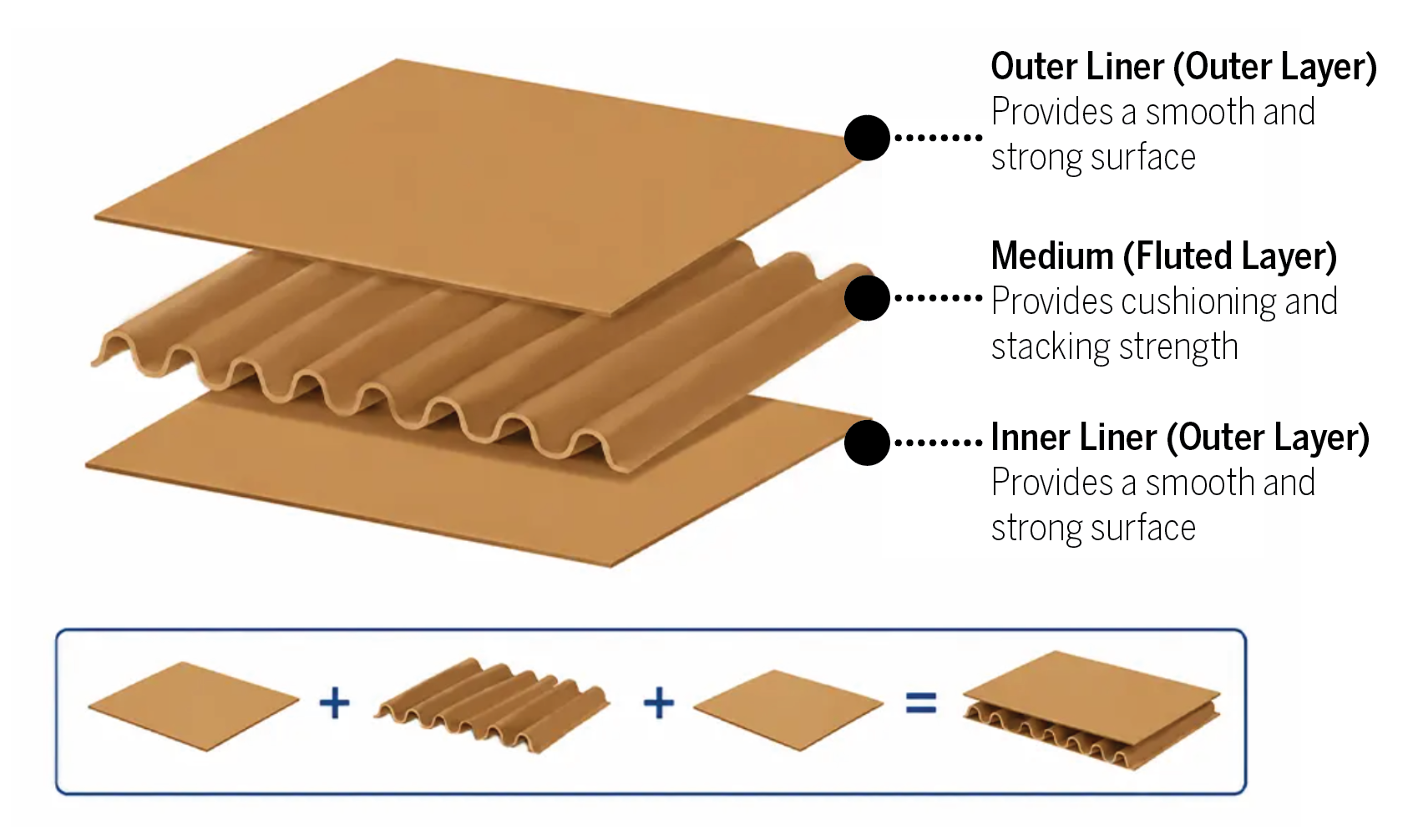
Corrugated boxes are no different. The inventors of corrugated fiberboard applied this same principle to paper when they put arches/fluting in the corrugated medium. Made from paper liners and a medium called containerboard, these thick sheets of paper are glued together to form a combined linerboard. When the flutes are anchored to the linerboard with an adhesive, they resist bending and pressure from all directions. Combined linerboard is typically made of three container board layers but can be even thicker.
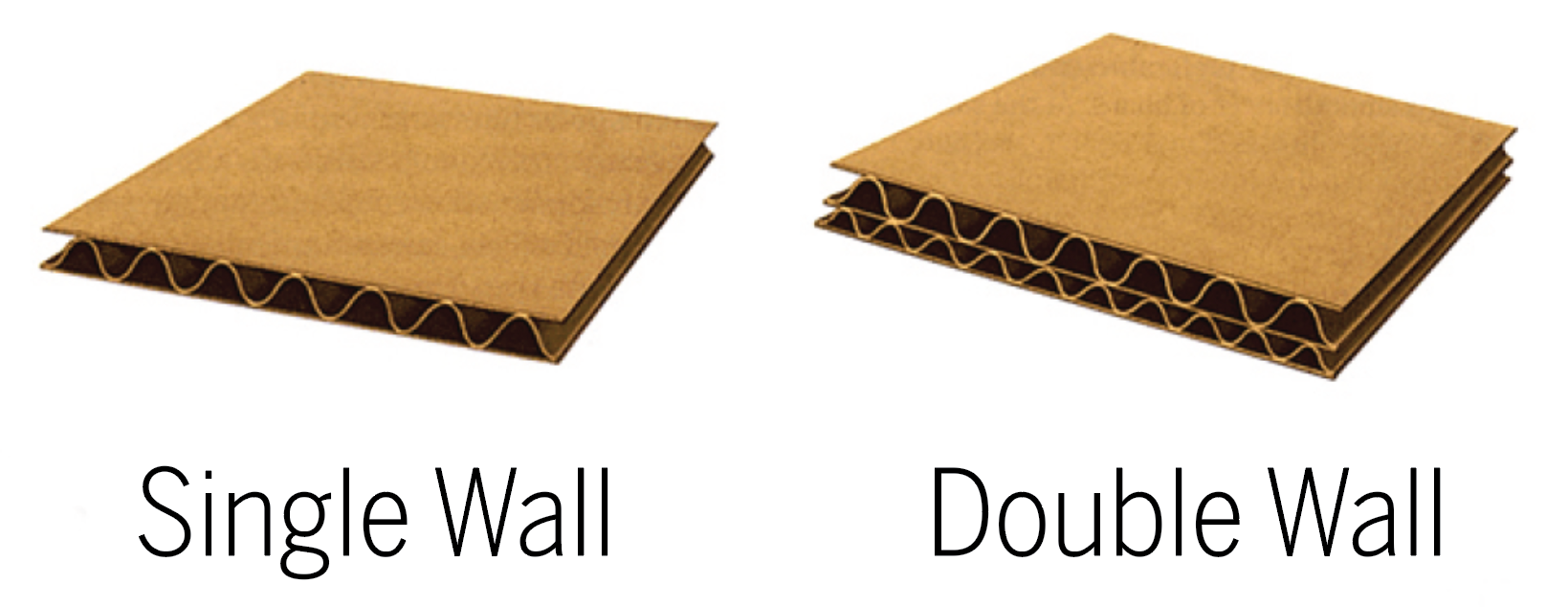
Liners are the flat layers of material usually found on the outside of the board. Sometimes liners can also be found on the inside like in the case of a double wall, where a middle liner is used to join the two layers of medium together.
The medium is the wavy corrugated layer in the middle which is glued between the flat inner and outer sheets of liner to create a corrugated board. The fluting found in the medium, is what gives corrugated packaging boxes their strength and why they’re so commonly used for shipping and storage. The flutes act like miniature shock absorbing paper springs that compress and distribute weight and force across the board. They help corrugated material support weight, withstand stacking pressure, and protect items against drops, dents, and vibration during transit.
Flute Types and Applications
Flutes and Mediums are not instruments or ghost whisperers
Imagine you have a wavy piece of medium sandwiched between two flat pieces of linerboard. If you look at that piece from the side, you’ll see little channels, sort of like tubes running in parallel through the piece of corrugated material. The waves that create those small channels are what we refer to as flutes. These flutes are what separate corrugated boxes from their cardboard cousins.
Depending on what you need the corrugated packaging to do, you might need different levels or strength or thickness to your board. The liners have a certain level of impact on strength of a material, but the flutes don't take a backseat in the relationship either. This is why we refer to board as being B-Flute or C-Flute. As the industry standardized over time, it assigned letters to certain thicknesses of board.

Print starts with Digital
JPGs, and Fonts, and PDFs oh my!
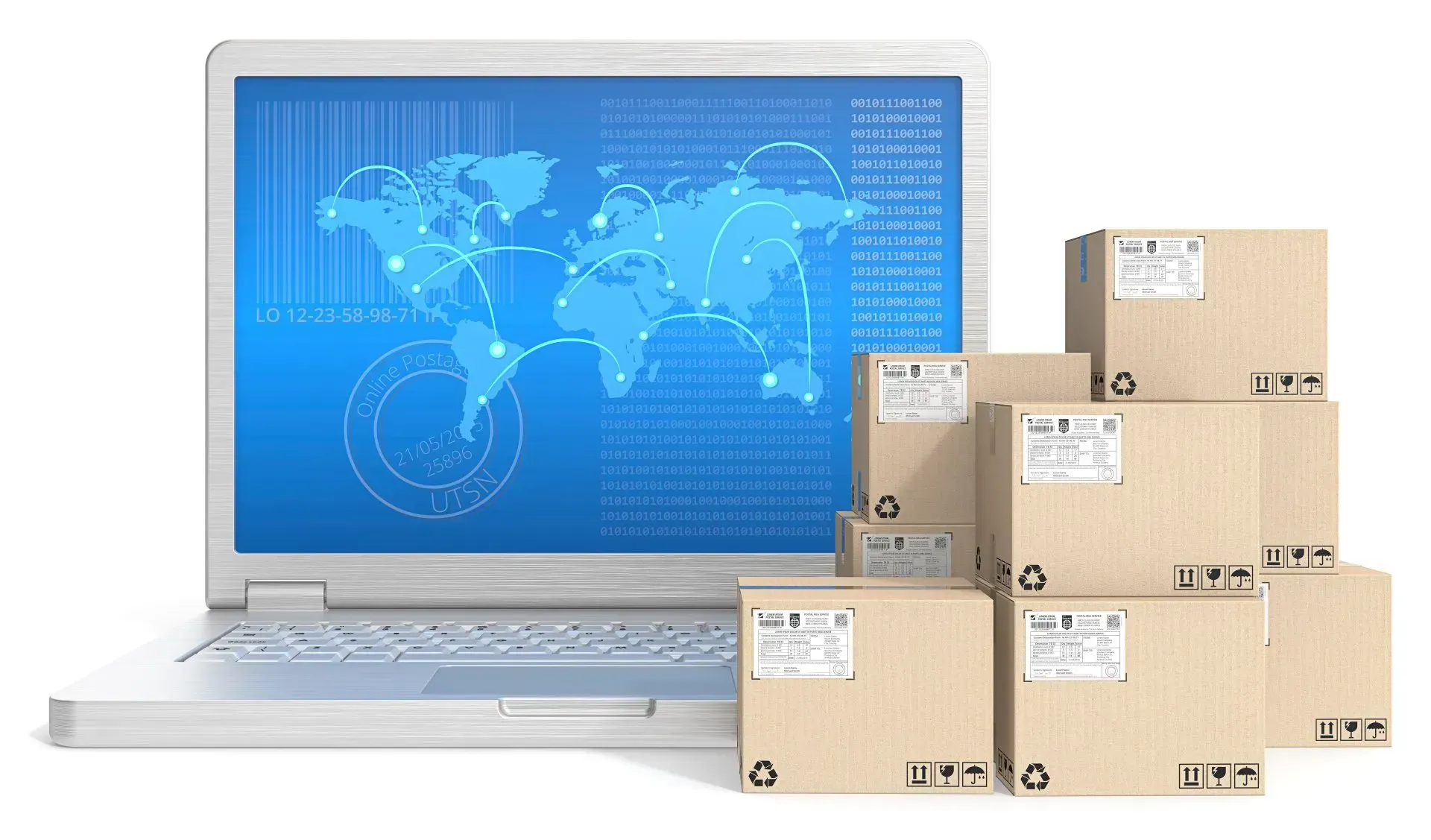
With consumers shopping more and more online, it’s opening the doors of opportunity to countless entrepreneurs like yourself. Even with limited startup, it’s easy to set up a business online thanks to e-commerce growth. The packaging might feel like an afterthought at this point, but it’s literally the product identity.
Many consumers judge a product by its packaging, so let us help you create something that will leave them feeling confident with their decision. With our understanding of shipping tests and requirements and insight into graphic design trends, we can help your business expand into the e-commerce market.
Open, Shelf, Shop
Need your product to be shelf or retail-ready?
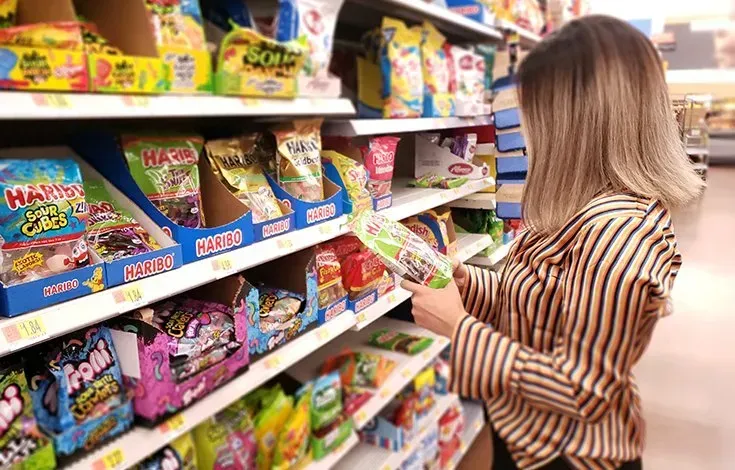
Major retail chains are all about convenience. That includes how long it takes to restock an item. A Retail Ready Package (RRP) ships in its own container, opens easily, and can be placed on a shelf or a full pallet display. You’ve seen these at your local grocery store or big box store for small pouches, blister packs, jars, and a variety of other items.
These items need to withstand the shipping process, but also be user friendly when they get to the store. We’ll design a package that can do both for you.
Brand Consistency
Having issues with color matching?
Harris Packaging’s color matching software and equipment adds an extra level of personalized service to ensure that your product will look the way you want every time. As a print facility that can perform onsite testing, we help brand owners control variables with scientific, repeatable measurement of your packaging. This way we can ensure that all of your boxes look consistent across multiple SKUs.
Speed to Market
Oops, I needed it yesterday.
You’re getting ready to roll out a new product for launch. Everything is ready except the packaging. Using our team, it’s possible to be able to design a sample with graphics and produce the order within days, not weeks. You can keep the momentum going for your company by getting your materials to market quickly and efficiently.
With the ultimate capabilities in production, whether it’s printed, labeled, or whatever your packaging challenges are, we have your solutions.